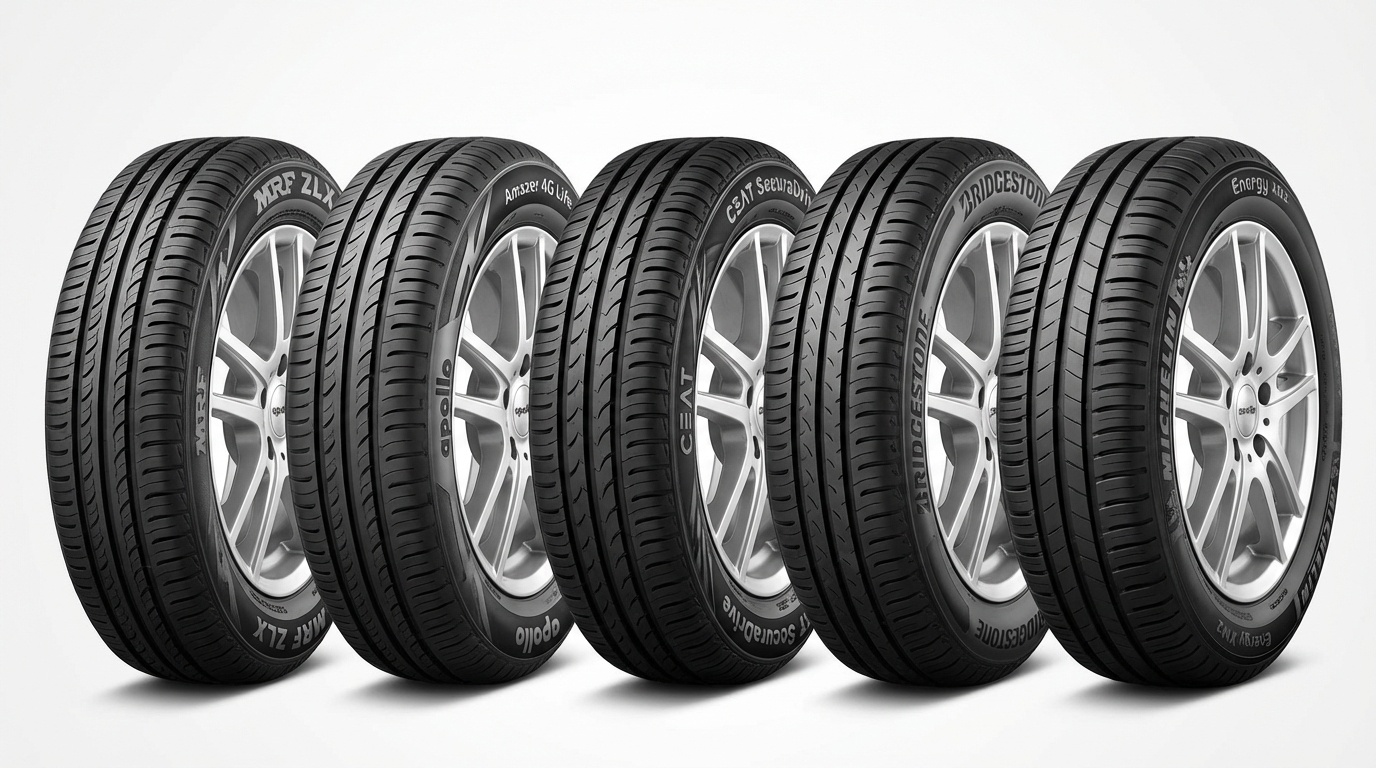
Every Indian driver has faced the dreaded puncture moment – that sudden sinking feeling as your vehicle starts pulling to one side. How your tyres handle this situation depends entirely on whether you have tubeless or tube tyres fitted. This single difference dramatically affects your safety, convenience, and overall ownership experience. In this comprehensive tubeless vs tube tyres comparison, we examine every important difference to help Indian drivers make the right choice for their vehicles and driving conditions.

Understanding the Basic Difference
Before comparing performance and practicality, understanding the fundamental construction difference between these two tyre types helps everything else make sense.
How Tube Tyres Work
Traditional tube tyres use a two-component system. The outer tyre casing provides structural support, grip, and tread. Inside this casing sits a separate inner tube – essentially an inflatable rubber balloon that holds pressurized air. The tube fills the space between the wheel rim and tyre casing, inflating to create the air pressure necessary for supporting vehicle weight and providing ride cushioning.
When a nail or sharp object penetrates a tube tyre, it pierces both the outer casing and inner tube simultaneously. Air escapes rapidly from the punctured tube, causing the characteristic sudden, dramatic deflation that makes tube tyre punctures genuinely dangerous at speed.
How Tubeless Tyres Work
Tubeless tyres eliminate the inner tube entirely. Instead, the tyre itself features a specially designed airtight inner liner – essentially a rubber coating bonded to the interior of the tyre casing. This liner seals against the wheel rim, creating an airtight chamber between tyre and rim without requiring a separate tube.
When a nail penetrates a tubeless tyre, the nail itself often remains embedded and temporarily plugs its own hole. Air escapes slowly around the nail rather than rushing out instantly. This crucial difference gives drivers significantly more time to safely stop before the tyre fully deflates.
Safety Comparison: The Most Critical Difference
Safety represents the most compelling argument in the tubeless vs tube tyre debate, and tubeless technology wins decisively in this category.
Puncture Behavior at Speed
Tube Tyres: When a tube tyre suffers a puncture at highway speed, the inner tube deflates rapidly and dramatically. The sudden pressure loss causes immediate loss of vehicle control. The steering pulls violently toward the deflating tyre. At speeds above 80 km/h, this sudden deflation creates genuine rollover risk, particularly for taller vehicles. Recovery requires immediate, controlled steering correction that many drivers struggle to execute under panic.
Tubeless Tyres: A tubeless puncture unfolds far more gradually and safely. The embedded object (nail, screw, or sharp stone) frequently plugs its own penetration hole partially. Air seeps slowly around the obstruction rather than evacuating explosively. Drivers typically notice gradual handling changes rather than sudden loss of control. This precious additional time – sometimes 10-30 minutes of continued driving – allows safe pullover and controlled stopping rather than emergency panic responses.
Safety Verdict: Tubeless tyres dramatically reduce puncture-related accident risk, particularly at highway speeds. This single safety advantage justifies their adoption regardless of other considerations.
Blowout Risk
Tube Tyres: Tube tyres carry higher blowout risk for several reasons. Heat buildup between the tube and casing creates hot spots. Tube chafing against the casing generates friction. Improper inflation causes tube pinching and failure. Any of these situations can trigger sudden, catastrophic blowout rather than gradual deflation.
Tubeless Tyres: Without a tube, heat buildup between components is eliminated. No friction between tube and casing exists. Pinching failures become impossible. Tubeless construction runs cooler overall, reducing thermal stress on the tyre and extending its service life simultaneously.
Puncture Repair: Convenience and Speed

Tube Tyre Puncture Process
Repairing a tube tyre puncture involves a laborious multi-step process. First, the wheel must be completely removed from the vehicle. Then the tyre must be broken off the rim using specialized tools. The inner tube requires removal, identification of the puncture location, vulcanization patch application, and reinstallation. The tyre then requires remounting on the rim and reinflation before being refitted to the vehicle.
This entire process typically requires 30-45 minutes even for experienced mechanics. Roadside repair without proper equipment becomes extremely difficult. Many drivers simply swap to the spare wheel and visit a puncture shop later. The tube itself may require complete replacement if the puncture is large or near the valve.
Cost: ₹80-200 for tube patch, ₹400-800 for tube replacement.
Tubeless Tyre Puncture Process
Tubeless puncture repair offers dramatically superior convenience. For small punctures (nails, screws under 6mm diameter), the tyre often doesn’t require removal from the vehicle. The embedded object is extracted, a rubber plug or mushroom plug is inserted through the puncture hole from outside, sealed with rubber cement, and the tyre is reinflated. Total time requirement is often 10-15 minutes.
For larger punctures requiring professional repair, the process remains faster than tube tyre repair since no tube handling is necessary. Additionally, tubeless repair kits available for ₹300-500 allow many drivers to handle roadside repairs independently without mechanic assistance.
Cost: ₹50-150 for plug repair, ₹200-400 for professional repair.
Emergency Temporary Repair
Tube Tyres: No practical emergency self-repair option without complete equipment.
Tubeless Tyres: Emergency puncture sealant sprays (₹250-500) inject liquid sealant through the valve, temporarily sealing punctures from inside. This provides sufficient inflation for reaching a proper repair facility safely.
Performance Comparison
Handling and Ride Quality
Tube Tyres: The additional mass of an inner tube marginally increases rotational weight, slightly affecting acceleration and fuel efficiency. The tube adds a layer between air pressure and tyre casing that subtly changes handling feel. At lower speeds this difference is imperceptible, but performance enthusiasts occasionally notice marginally less precise steering feedback.
Tubeless Tyres: Without tube mass, rotational inertia decreases slightly, improving acceleration response marginally. Direct air-to-casing contact provides more immediate pressure response to load changes, translating into slightly more precise handling feedback. This advantage remains subtle in everyday driving but becomes noticeable during spirited driving or emergency maneuvers.
Fuel Efficiency Impact
Lower rotational weight in tubeless tyres provides marginal fuel efficiency improvement. Additionally, tubeless tyres typically run at slightly lower pressures than tube equivalents without performance penalty, allowing marginally better fuel economy through optimized contact patch shape.
Estimated Improvement: 1-2% fuel efficiency advantage for tubeless construction – small but measurable over thousands of kilometers.
Heat Management
Tube Tyres: Heat generated during driving has nowhere to dissipate efficiently with a tube present. The air gap between tube and casing creates insulation that traps heat. Sustained high-speed driving builds heat progressively, increasing failure risk.
Tubeless Tyres: Direct contact between air and tyre casing allows more efficient heat dissipation. The tyre runs cooler at all speeds, reducing thermal degradation and extending service life. This advantage becomes particularly significant during Indian summers or sustained highway driving.
Maintenance Requirements
Pressure Monitoring
Tube Tyres: Tubes are slightly more prone to gradual pressure loss through microscopic permeation. Weekly pressure checks are advisable. Temperature changes affect tube pressure more dramatically than tubeless equivalents.
Tubeless Tyres: The airtight inner liner retains pressure more effectively than inner tubes. Pressure loss between checks is typically slower. However, rim seal integrity becomes important – any damage to the rim’s bead seat area can cause gradual tubeless pressure loss that tube tyres wouldn’t experience.
Wheel Rim Requirements
Tube Tyres: Can function adequately with slightly damaged or imperfect rims since the tube provides the airtight seal. Older vehicles with rim damage often continue using tube tyres because minor rim imperfections don’t affect performance.
Tubeless Tyres: Require properly maintained, undamaged rims with clean bead seating surfaces. Any rim damage, corrosion, or bending creates potential air leakage at the tyre-rim interface. Alloy wheels suit tubeless technology better than older steel rims that may have surface imperfections.
Long-term Maintenance Costs
Tube Tyres:
- Tube replacement every 2-3 years regardless of tyre condition: ₹400-800
- Higher puncture repair frequency and cost
- Potential for multiple tubes over tyre lifespan
Tubeless Tyres:
- No tube replacement costs
- Lower puncture repair costs
- Occasional rim cleaning for bead seal maintenance
Annual Maintenance Cost Advantage: Tubeless tyres save approximately ₹500-1,500 annually in reduced maintenance costs.
Cost Analysis

Initial Purchase Cost
Tube Tyres:
- Tyre cost: ₹2,500-₹5,000
- Inner tube: ₹300-₹600
- Total per tyre: ₹2,800-₹5,600
- Installation: ₹150-₹250 per tyre
Tubeless Tyres:
- Tyre cost: ₹3,000-₹7,000
- No tube required
- Total per tyre: ₹3,000-₹7,000
- Installation: ₹200-₹350 per tyre (slightly higher for bead seating)
Initial Cost Observation: Tube tyres appear cheaper initially, but the difference narrows when adding tube costs. Premium tubeless tyres cost more but eliminate tube expenses throughout their lifespan.
Five-Year Total Ownership Cost Comparison
Tube Tyre Calculation (one tyre, 5 years):
- Initial tyre and tube: ₹4,200
- Tube replacement at year 2: ₹600
- Average puncture repairs (6 punctures): ₹900
- Total five-year cost: ₹5,700
Tubeless Tyre Calculation (one tyre, 5 years):
- Initial tyre: ₹5,000
- No tube replacement
- Average puncture repairs (3 punctures at lower cost): ₹300
- Total five-year cost: ₹5,300
Five-Year Savings: Approximately ₹400 per tyre (₹1,600 for complete set) with tubeless technology, plus superior safety and convenience throughout ownership period.
Suitability for Indian Road Conditions
Indian roads present unique challenges that influence which tyre technology performs better in real-world conditions.
Urban Road Challenges
Indian city roads feature abundant debris including nails, screws, broken glass, and sharp stones from construction. Potholes are common in most cities. Stop-and-go traffic creates repeated low-speed stress. Narrow lanes bring frequent contact with kerbs and road edges.
Tubeless Advantage in Cities: Higher nail and screw encounter frequency makes slow-deflation puncture behavior particularly valuable. Roadside repair convenience matters more when punctures occur frequently.
Rural and Highway Conditions
Rural roads feature more unpredictable surfaces, greater debris variety, and longer distances from repair facilities. Highway driving makes sudden puncture deflation more dangerous.
Tubeless Advantage on Highways: Slow deflation at speed provides crucial safety margin. Distance from repair facilities makes emergency sealant solutions more valuable. Better heat management during sustained high speeds reduces blowout risk.
Specific Challenge: Indian Pothole Impact
Deep potholes create pinch flat risk where the tyre is compressed between road edge and rim, trapping and puncturing the inner tube. This pinch flat failure mode is exclusive to tube tyres. Tubeless construction eliminates pinch flat risk entirely, making tubeless technology particularly valuable on Indian roads where pothole encounters are nearly unavoidable.
When to Choose Tube Tyres
Despite tubeless technology’s advantages, tube tyres remain appropriate in specific situations.
Older Vehicles with Spoke Wheels
Classic motorcycles and older vehicles with spoke wheels cannot seal adequately for tubeless operation. The spoke holes in the rim prevent the airtight seal that tubeless technology requires. These vehicles must continue using tube tyres until wheel replacement.
Severely Damaged Alloy Wheels
When alloy wheels have significant rim damage, bends, or corrosion preventing proper tubeless bead seating, tube conversion provides a temporary solution. Fitting a tube inside a tubeless tyre allows continued use while wheel repair or replacement is arranged.
Remote Area Driving with Limited Resources
In extremely remote regions where tubeless repair kits are unavailable, tube tyre repairs using basic patch kits and pump remain more accessible. Any village mechanic can repair a tube tyre with minimal tools.
Vintage and Classic Vehicle Restoration
Period-correct restoration requires tube tyres on vehicles originally fitted with this technology. Authenticity considerations override practical performance advantages.
When to Choose Tubeless Tyres
Tubeless technology suits the vast majority of modern vehicle owners and driving situations.
All Modern Passenger Cars
Every modern passenger car sold in India since approximately 2008 comes factory-fitted with tubeless tyres and alloy or tubeless-compatible steel wheels. Continuing with tubeless technology makes complete sense for these vehicles.
Family Vehicles
Safety advantages during punctures make tubeless technology particularly important for family vehicles carrying children and elderly passengers. The gradual deflation characteristic provides crucial additional time for controlled, safe stopping.
Highway and Long-Distance Drivers
Anyone regularly covering highway distances benefits enormously from tubeless technology’s safety advantages. The combination of slow deflation behavior, emergency sealant compatibility, and better heat management creates compelling advantages for long-distance drivers.
Performance and Premium Vehicles
Tubeless technology’s handling precision advantages, heat management benefits, and compatibility with modern TPMS (Tyre Pressure Monitoring Systems) make it the only appropriate choice for performance and premium vehicles.
Converting Between Tyre Types
Converting from Tube to Tubeless
Many older vehicle owners ask whether conversion from tube to tubeless is possible. The answer depends entirely on wheel condition and type. Conversion requires tubeless-compatible rims with proper bead seats, rim inspection and cleaning to remove corrosion, tubeless-rated tyres rather than tube-type tyres, and professional installation ensuring proper bead seating. Cost of conversion including wheel inspection runs approximately ₹800-1,500 per wheel.
Converting from Tubeless to Tube
While technically possible by fitting a tube inside a tubeless tyre, this practice is discouraged. Tubeless tyre interiors aren’t designed for tube compatibility. The tube may chafe against the inner liner, creating failure risk. This conversion should only occur as emergency temporary measure, never as permanent solution.
Tyre Pressure Monitoring System Compatibility
Modern vehicles increasingly feature TPMS that warns drivers of pressure loss before it becomes dangerous. This technology works exclusively with tubeless tyres, as the sensor mounts inside the tyre against the rim. Tube tyres cannot accommodate TPMS sensors, making them incompatible with this increasingly standard safety feature.
For vehicles equipped with TPMS, tubeless tyres are not merely preferable but mandatory for the system to function correctly.
Expert Verdict: The Clear Winner
After comprehensive analysis across every relevant category, tubeless tyres emerge as the superior choice for the overwhelming majority of Indian drivers in 2026.
Safety: Tubeless wins decisively through gradual deflation behavior.
Puncture Repair: Tubeless wins through faster, cheaper, more convenient repairs.
Performance: Tubeless wins marginally through weight and heat advantages.
Fuel Efficiency: Tubeless wins marginally through lower rotational weight.
Maintenance Cost: Tubeless wins through eliminated tube replacement costs.
Total Ownership Cost: Tubeless wins through lower five-year expenditure.
Convenience: Tubeless wins comprehensively through emergency sealant compatibility.
Conclusion: Embrace Tubeless Technology
The tubeless vs tube tyre debate reaches a clear conclusion for modern Indian drivers. Tubeless technology offers superior safety, better performance, lower maintenance costs, greater convenience, and comparable total ownership costs despite slightly higher initial investment.
Tube tyres retain relevance only in specific situations: spoke-wheel vehicles requiring tube fitment, severely damaged rims preventing tubeless sealing, remote area driving with minimal repair resources, and vintage vehicle restoration projects.
For everyone else – every modern passenger car owner, every family driver, every highway commuter, and every safety-conscious driver navigating India’s challenging roads in 2026 – tubeless tyres represent the clearly superior choice. The gradual deflation advantage alone justifies adoption, but combined with every other advantage tubeless technology offers, the decision becomes straightforward.
If your vehicle still uses tube tyres and your wheels support tubeless conversion, consider making the change during your next tyre replacement. The safety improvement alone makes this one of the most valuable upgrades available for your vehicle.