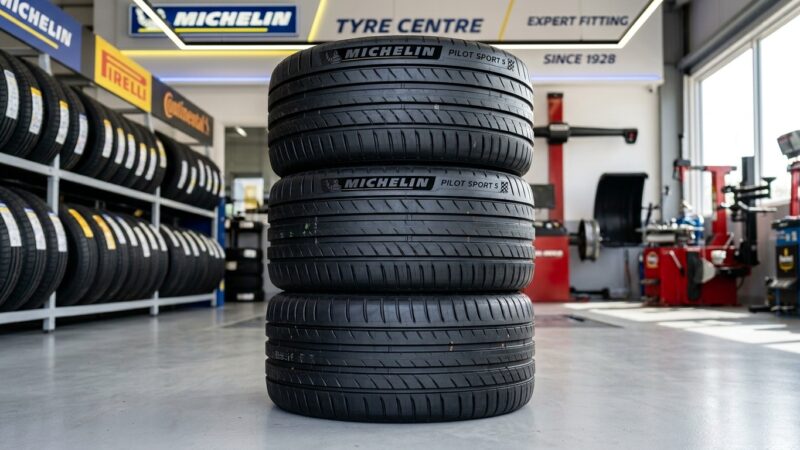
A good set of tyres for an Indian car costs anywhere from Rs. 12,000 to Rs. 60,000 or more. That is a significant investment — and most car owners replace their tyres far sooner than necessary simply because they do not follow a few basic maintenance habits. The average Indian driver replaces tyres every 3 to 4 years. With the right care, that same set of tyres can easily last 5 to 7 years or more.
In this guide, we share 10 proven, practical tips to increase tyre life specifically for Indian road conditions and climate. These tips are easy to follow, cost almost nothing to implement, and can save you tens of thousands of rupees over the life of your car.
What Causes Tyres to Wear Out Faster in India?
Before we get into the tips, it helps to understand why Indian tyres tend to wear out faster than in other countries. India’s roads and climate create a uniquely harsh environment for tyres:
- Extreme heat: Summer temperatures in many parts of India regularly exceed 45°C. High road surface temperatures accelerate rubber degradation and heat buildup inside the tyre.
- Poor road surfaces: Potholes, broken edges, speed breakers, and rough patches cause impact damage that weakens tyre structure over time.
- Stop-and-go city traffic: Constant braking and acceleration in city traffic creates more friction and heat than smooth highway driving.
- Monsoon waterlogging: Driving through waterlogged roads increases sidewall stress and can cause slow air leaks over time.
- Dust and debris: Indian roads carry more abrasive dust and debris than roads in many other countries, increasing tread wear.
Understanding these factors helps you appreciate why the following tips make such a significant difference to tyre life in Indian conditions.
10 Proven Tips to Increase Tyre Life in India
Tip 1: Maintain Correct Tyre Pressure — Check Every 2 Weeks
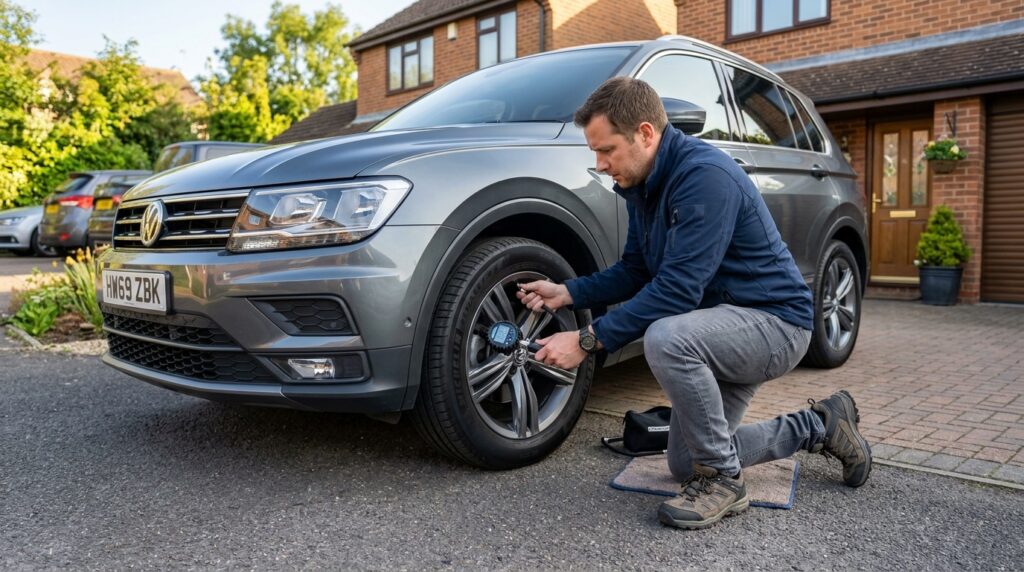
Correct tyre pressure is the single most important factor in tyre longevity. Under-inflated tyres flex excessively, generating heat and wearing out the edges of the tread rapidly. Over-inflated tyres wear out the centre of the tread and are vulnerable to impact damage. Both conditions can reduce tyre life by 20 to 40 percent.
Check your tyre pressure every two weeks using a reliable gauge — always when the tyres are cold, before driving. Set the pressure to the manufacturer’s recommendation found on your driver’s door jamb sticker. This one habit alone can extend your tyre life by tens of thousands of kilometres.
Tip 2: Rotate Your Tyres Every 8,000 to 10,000 km
Front tyres on most Indian cars — which are front-wheel drive — wear two to three times faster than rear tyres because they handle steering, power delivery, and carry the engine weight simultaneously. Without rotation, you end up replacing front tyres while rear tyres still have plenty of life left.
Regular rotation moves tyres between positions so all four wear evenly. This simple step can increase the total life of a set of tyres by 20 to 30 percent, effectively getting you thousands of extra kilometres before replacement. Combine rotation with your regular service for convenience.
Tip 3: Get Wheel Alignment Done Every 15,000 km
Wheel alignment refers to the angle at which your tyres contact the road. When alignment is off — even slightly — the tyre is not rolling straight. Instead, it is dragging at a slight angle, scrubbing rubber off one edge continuously. This causes rapid, uneven wear on the inner or outer shoulder of the tyre.
On Indian roads full of potholes and speed breakers, alignment can go out of spec easily and quickly. Get alignment checked every 15,000 km or after any significant pothole impact. Proper alignment ensures the full tread width contacts the road evenly, maximising tyre life and fuel efficiency simultaneously.
Tip 4: Balance Your Wheels When Fitting New Tyres
Wheel balancing ensures that the weight of the tyre and wheel assembly is distributed evenly around the axle. An unbalanced wheel vibrates at speed, and this vibration creates uneven wear patches on the tyre — called cupping or scalloping — that significantly reduce tyre life and ride quality.
Always insist on balancing when new tyres are fitted. If you feel a vibration through the steering wheel or seat at highway speeds, it is likely a balancing issue — get it corrected immediately before the uneven wear gets worse. Balancing typically costs Rs. 50 to Rs. 150 per wheel.
Tip 5: Avoid Aggressive Driving Habits
How you drive has a direct and massive impact on how long your tyres last. Aggressive driving habits destroy tyres far faster than any road condition:
- Hard braking: Every emergency stop scrubs a measurable amount of rubber off the tread. Smooth, progressive braking preserves tyre life significantly.
- Rapid acceleration: Wheelspin from aggressive acceleration burns through tread rubber quickly, especially on the drive wheels.
- Fast cornering: Taking corners at high speed creates lateral forces that scrub the tyre sideways against the road, wearing the shoulder of the tread rapidly.
- Mounting kerbs and speed breakers fast: Every hard impact weakens the tyre’s internal structure and can cause the kind of invisible damage that leads to premature failure.
Smooth, anticipatory driving — braking early, accelerating gently, taking corners at moderate speeds — can easily double the life of your tyres compared to aggressive driving.
Tip 6: Do Not Overload Your Vehicle
Every tyre has a maximum load rating. Exceeding it puts the tyre under excessive stress — the sidewalls flex more than they are designed to, heat builds up faster, and the internal structure weakens more rapidly with every kilometre. Overloading does not just reduce tyre life, it increases the risk of a sudden blowout.
Check your car’s maximum load capacity in the owner’s manual. During festival season road trips when the car is full of passengers and luggage, be especially mindful of the total load. If you regularly carry heavy loads, consider upgrading to tyres with a higher load index.
Tip 7: Park in Shade Whenever Possible
UV rays and extreme heat are silent killers of tyre rubber. In Indian summer conditions, the surface temperature of a tyre parked in direct sunlight can reach 60 to 70°C or more. This accelerates the oxidation and hardening of the rubber compound significantly over time.
Parking in shade — or in a covered parking area — reduces UV exposure and heat buildup dramatically. For cars that are parked outdoors for long periods, tyre covers are an inexpensive way to protect the sidewalls from UV damage and extend tyre life meaningfully.
Tip 8: Inspect Tyres Monthly for Early Warning Signs
A quick visual inspection every month takes less than 3 minutes and can catch problems early — before they become expensive or dangerous. Look for:
- Uneven tread wear across the width of the tyre
- Small cuts, cracks, or bulges on the sidewall
- Any object embedded in the tread — nails, glass, or stones
- Tread wear indicators — small raised bars in the grooves that become flush with the tread when depth is critically low
- Any visible deformation or asymmetry in the tyre shape
Catching a small sidewall crack or a partially embedded nail early means you can address it before it causes a blowout or forces an emergency replacement.
Tip 9: Use Nitrogen Instead of Air for Inflation
Nitrogen inflation is increasingly available at petrol stations and tyre shops across India, usually for Rs. 50 to Rs. 100 per tyre. Nitrogen molecules are larger than oxygen molecules and permeate through the tyre rubber more slowly — meaning nitrogen-inflated tyres lose pressure more gradually than air-inflated tyres.
Additionally, nitrogen is dry — unlike compressed air which contains moisture. Moisture inside a tyre causes internal oxidation of the metal rim and the tyre’s inner liner over time. Nitrogen-filled tyres maintain more consistent pressure across temperature changes, reducing the risk of under-inflation and its associated tyre-wear damage. For a small additional cost, nitrogen offers genuine long-term benefits for tyre life.
Tip 10: Choose the Right Tyre for Your Driving Conditions
Not all tyres are equally suited to all conditions. Fitting a tyre that is designed for your specific driving environment means it will perform better and last longer than a mismatched tyre working outside its intended parameters.
- City drivers: Choose tyres with lower rolling resistance and good heat dissipation for stop-and-go traffic.
- Highway drivers: Opt for tyres with higher speed ratings and heat-resistant compounds designed for sustained high-speed use.
- Mixed city and highway: Choose an all-round touring tyre that balances both requirements.
- Monsoon regions: Prioritise tyres with deep grooves and excellent wet traction ratings.
Quick Reference: Tyre Life Extension Schedule
Use this simple schedule to keep all your tyre maintenance on track throughout the year:
| Frequency | Task | Benefit |
| Every 2 weeks | Check tyre pressure | Prevents uneven wear and blowouts |
| Every month | Visual tyre inspection | Catches damage and wear early |
| Every 8,000–10,000 km | Rotate tyres | Even wear across all four tyres |
| Every 15,000 km | Wheel alignment check | Prevents edge wear and pulling |
| When fitting new tyres | Wheel balancing | Prevents vibration and cupping wear |
| Every 5 years | Replace tyres | Prevents age-related rubber failure |
| Before long trips | Full tyre inspection + pressure | Prevents highway blowouts |
Small Habits, Big Savings — Start Today
Increasing tyre life is not complicated. It does not require expensive equipment or technical knowledge. It just requires consistency — a few small habits done regularly that together make a massive difference. Check your pressure every two weeks, rotate on schedule, get alignment done at every service, and drive smoothly. That is really all it takes.
A set of tyres that costs Rs. 25,000 and lasts 40,000 km costs Rs. 0.63 per km. The same tyres properly maintained to last 60,000 km cost just Rs. 0.42 per km — a saving of 33 percent. Over a lifetime of car ownership, good tyre habits save you lakhs of rupees. Start today with a simple pressure check and a visual inspection — your tyres will thank you with every kilometre.
Looking for premium quality tyres built to last longer on Indian roads? Browse our complete range at the best prices and get expert advice from our team. Visit our website today!