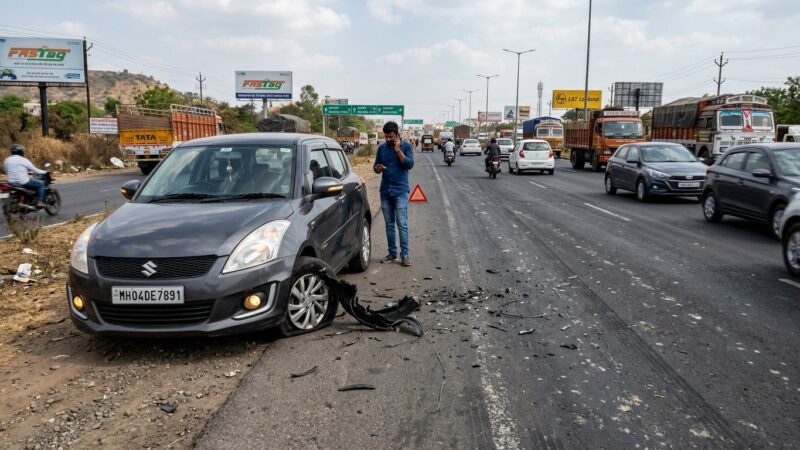
A tyre burst is one of the most terrifying things that can happen while driving. One moment you are cruising comfortably at 100 km/h on a highway, and the next, there is a loud explosion, the car lurches violently to one side, and you are fighting to maintain control. Every year in India, tyre bursts cause hundreds of fatal accidents — most of which are entirely preventable.
The good news is that tyre bursts almost never happen without warning. There are always contributing factors that build up over time — and if you know what to look for, you can catch them before they turn into a blowout. In this guide, we cover the 8 main causes of tyre burst in India, the warning signs to watch for, what to do if a blowout happens, and how to prevent it completely.
What Exactly Is a Tyre Burst?
A tyre burst — also called a blowout — happens when the tyre fails suddenly and catastrophically, releasing all its air pressure in a fraction of a second. Unlike a slow puncture where pressure drops gradually, a blowout is instant and violent. The tyre essentially tears apart from the inside out.
The physics of a blowout are brutal. At highway speeds, when a front tyre bursts, the car immediately pulls hard toward the side of the burst. If a rear tyre bursts, the back of the car swings out. Either way, the driver has only a split second to react — and the wrong reaction (slamming the brakes) almost always makes things worse.
8 Main Causes of Tyre Burst in India
Understanding why tyres burst is the first step toward preventing it. Here are the eight most common causes of tyre blowouts on Indian roads:
1. Under-Inflation — The Number One Cause of Tyre Bursts
Low tyre pressure is the single biggest cause of tyre bursts in India, responsible for the majority of blowouts on Indian highways. When a tyre is under-inflated, its sidewalls flex excessively with every rotation. This repeated flexing generates enormous heat inside the tyre — and heat is the true killer.
As the tyre overheats, the rubber and internal fabric structure begin to break down. The tyre weakens from within, and eventually, the internal pressure exceeds what the weakened structure can hold — resulting in a sudden, explosive burst. This process can happen silently over a few hours of highway driving on a hot day.
Prevention: Check tyre pressure every 2 weeks and always before a long highway trip. Never drive on a visually low tyre.
2. Over-Inflation — Too Much Pressure Is Also Dangerous
Most people think more pressure means safer tyres. This is wrong. An over-inflated tyre is stretched tight and has very little ability to absorb impacts. When it hits a pothole, a speed breaker, or any road debris, the tyre has no flex to cushion the blow. The sudden impact force can easily exceed the tyre’s structural limits and cause an immediate burst.
Over-inflated tyres are particularly dangerous on Indian roads, which are full of potholes, uneven patches, and sharp-edged road debris. The combination of a hard, over-pressured tyre and an Indian pothole is a recipe for a blowout.
Prevention: Always inflate to the car manufacturer’s recommended pressure — never to the maximum pressure printed on the tyre sidewall.
3. Worn Out Tread — Driving on Bald Tyres
A tyre with very little tread remaining has an extremely thin layer of rubber between the road and the air chamber inside. This thin rubber is vulnerable to penetration from sharp objects on the road — nails, glass shards, metal debris — and also to heat damage from the friction of driving. Bald tyres are also far more likely to suffer internal structural damage from even moderate road impacts.
Prevention: Replace tyres when tread depth reaches 2 mm. Use the coin test monthly to monitor tread depth.
4. Road Hazards — Potholes, Debris and Sharp Objects
Indian roads are some of the most challenging in the world for tyres. Deep potholes, broken road edges, construction debris, sharp metal objects, and even large stones can all cause immediate tyre damage. A high-speed impact with a deep pothole can cause the tyre to pinch against the rim — this is called a pinch flat or impact break — rupturing the inner liner and sometimes the carcass of the tyre immediately.
Road debris like nails and glass can also create slow punctures that go unnoticed until the pressure drops to a dangerous level and a burst becomes inevitable during the next high-speed drive.
Prevention: Slow down on poor road sections. Avoid driving over debris. Inspect tyres after hitting a major pothole.
5. Overloading the Vehicle
Every tyre has a load index — a maximum weight it is designed to carry safely. When a vehicle is overloaded, each tyre carries more weight than it was built for. The excessive load causes abnormal sidewall flex, rapid heat buildup, and accelerated internal structural damage. Overloaded tyres are highly vulnerable to blowouts, especially during long highway drives in hot weather.
This is a common cause of tyre bursts in India during festival seasons and long family road trips when cars are packed well beyond their rated capacity with passengers and luggage.
Prevention: Never exceed your car’s maximum load rating. If carrying heavy loads, increase tyre pressure slightly as per the owner’s manual recommendation for loaded conditions.
6. Tyre Age and Rubber Degradation
Rubber is not a permanent material. Over time, exposure to heat, UV rays, ozone, and the repeated stress of driving causes the rubber compound to harden and become brittle. Old tyres develop micro-cracks in the rubber — both on the surface and inside the tyre where you cannot see them. These cracks weaken the tyre’s structure gradually until it can no longer withstand the pressure and stress of driving.
In India’s extreme climate — intense summer heat, monsoon moisture, and wide temperature variations — rubber degrades faster than in milder climates. A tyre that looks perfectly fine from the outside may be critically weak inside if it is more than 5 years old.
Prevention: Check the DOT date on your tyre sidewall. Replace tyres older than 5 years regardless of how they look.
7. Driving at Excessively High Speeds
Every tyre has a speed rating — the maximum speed it is designed to sustain safely. Driving consistently above a tyre’s speed rating generates heat faster than the tyre can dissipate it. The internal temperature rises rapidly, the rubber softens and weakens, and the risk of a structural failure increases dramatically with every kilometre driven at excessive speed.
Even within the speed rating, sustained high-speed driving on a hot day with even slightly low tyre pressure creates dangerous conditions. The combination of speed, heat, and low pressure is responsible for a large proportion of highway tyre bursts in India.
Prevention: Observe speed limits. Ensure your tyres have the correct speed rating for your vehicle. Check pressure before every long highway drive.
8. Sidewall Damage and Previous Repairs
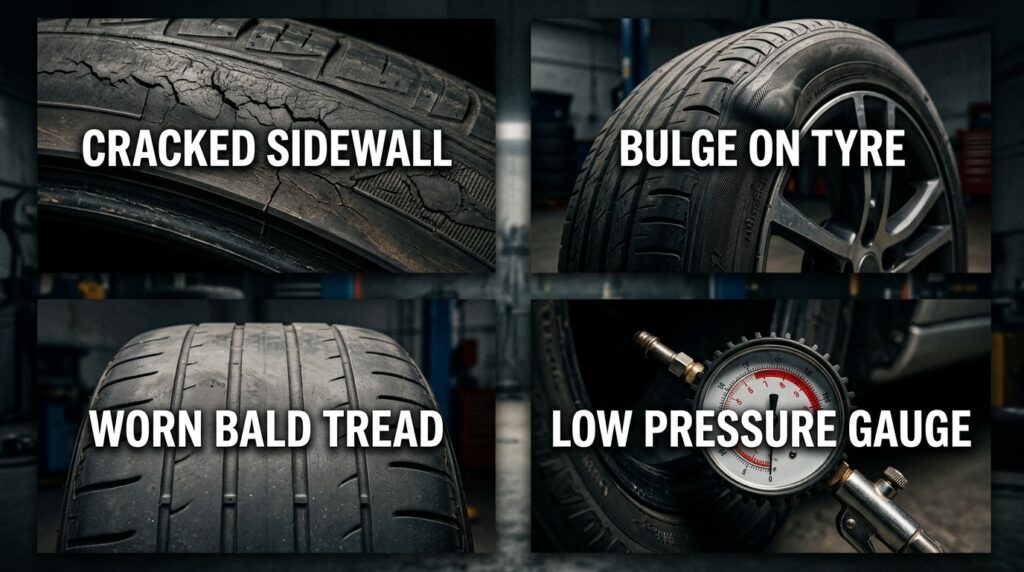
A tyre that has visible cuts, cracks, or bulges on its sidewall is a tyre that is about to burst. The sidewall is the most structurally critical part of the tyre — it bears the entire weight of the vehicle and flexes with every rotation. Any damage to the sidewall compromises this critical structure.
Similarly, a tyre that has been repaired on the sidewall — or a tyre that has had multiple puncture repairs — has reduced structural integrity. Under highway speeds and loads, a previously repaired tyre is significantly more likely to fail suddenly than an undamaged one.
Prevention: Never use a tyre with sidewall damage or a bulge. Never repair a sidewall puncture — replace the tyre. Limit puncture repairs to the tread area only.
Warning Signs That Your Tyre May Burst Soon
Your tyre will almost always give you warning signs before it bursts. Learn to recognise these and act immediately:
| Warning Sign | What to Do |
| Visible bulge or blister on sidewall | Stop driving immediately. Replace tyre same day |
| Car pulling hard to one side | Check pressure on all tyres. Inspect for damage |
| Steering feels heavy or unresponsive | Pull over safely and inspect all tyres |
| Unusual thumping or vibration at speed | Reduce speed and get tyres inspected |
| Tyre looks visually low or flat | Do not drive on it. Check pressure immediately |
| Hissing sound from tyre area | You have a slow puncture — fix it before driving further |
| TPMS warning light on dashboard | Check all tyre pressures immediately |
What to Do If Your Tyre Bursts While Driving
If a tyre bursts while you are driving, your instinct will be to hit the brakes hard and steer away from the affected side. Both of these reactions are wrong and can cause you to lose complete control of the vehicle. Here is the correct procedure:
- Do NOT brake suddenly: Braking hard during a blowout can cause the car to spin. Keep your foot off the brake initially.
- Hold the steering wheel firmly with both hands: The car will pull toward the burst tyre. Resist this pull and keep the car going straight.
- Gently accelerate for 1-2 seconds: This sounds counterintuitive, but a brief, light acceleration helps stabilise the car and prevent it from being pulled off course.
- Gradually ease off the accelerator: Let the car slow down naturally through engine braking.
- Steer gently toward the side of the road: Once the car has slowed to below 40 km/h, carefully steer to the shoulder or emergency lane.
- Use hazard lights immediately: Turn on your hazard lights as soon as the burst happens to warn other drivers.
- Come to a complete stop safely away from traffic: Only apply the brakes very gently once you are at low speed and away from the main carriageway.
How to Prevent Tyre Burst — Complete Checklist
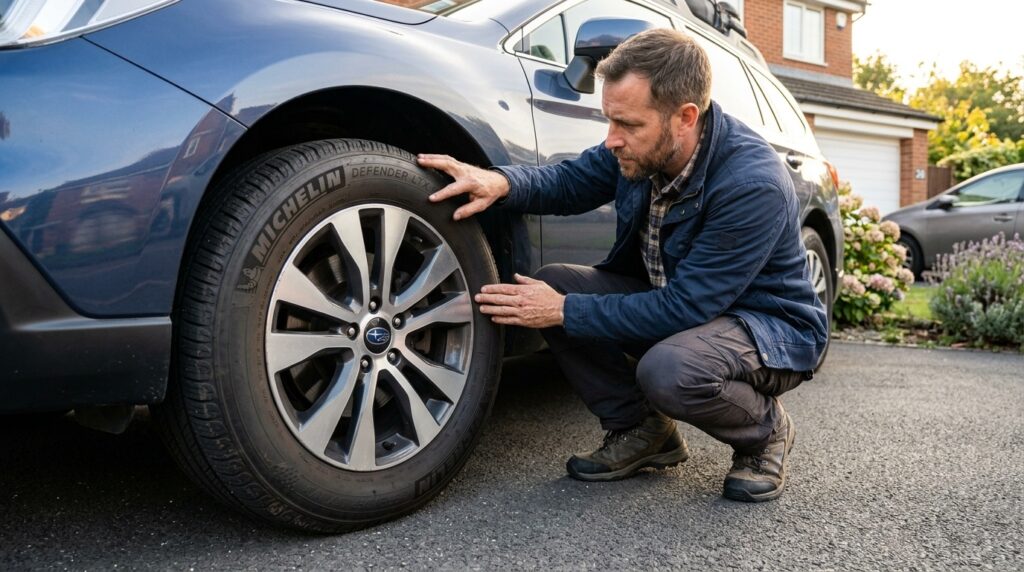
Preventing a tyre burst is completely within your control. Follow this simple checklist and your risk of a blowout drops dramatically:
- Check tyre pressure every 2 weeks — always when cold, before driving
- Always inflate to the car manufacturer’s recommended PSI — not the tyre’s maximum
- Inspect all four tyres visually every month for cracks, bulges, and tread depth
- Replace tyres when tread depth reaches 2 mm or when the tyre is over 5 years old
- Never overload your vehicle beyond its rated capacity
- Slow down on bad road sections and avoid driving over sharp debris
- Check tyres the morning after hitting a significant pothole
- Get wheel alignment and balancing done every 15,000 km
- Rotate tyres every 8,000–10,000 km for even wear
- Always carry a properly inflated spare tyre and check it during your tyre pressure checks
A Tyre Burst Is Preventable — Do Not Ignore the Warning Signs
A tyre burst at highway speed is one of the most dangerous situations a driver can face. But unlike many road hazards, it is almost entirely preventable. The eight causes we have covered — under-inflation, over-inflation, worn tread, road hazards, overloading, tyre age, excessive speed, and sidewall damage — all have clear, actionable solutions.
Take 5 minutes every two weeks to check your tyre pressure. Spend 2 minutes every month visually inspecting your tyres. Replace them on time. These small habits take almost no time or effort — but they can absolutely save your life and the lives of everyone in your car.
Ready to replace your old tyres before they let you down? Browse our wide range of premium, safety-rated tyres for every car and budget. Visit our website today and drive with total confidence!