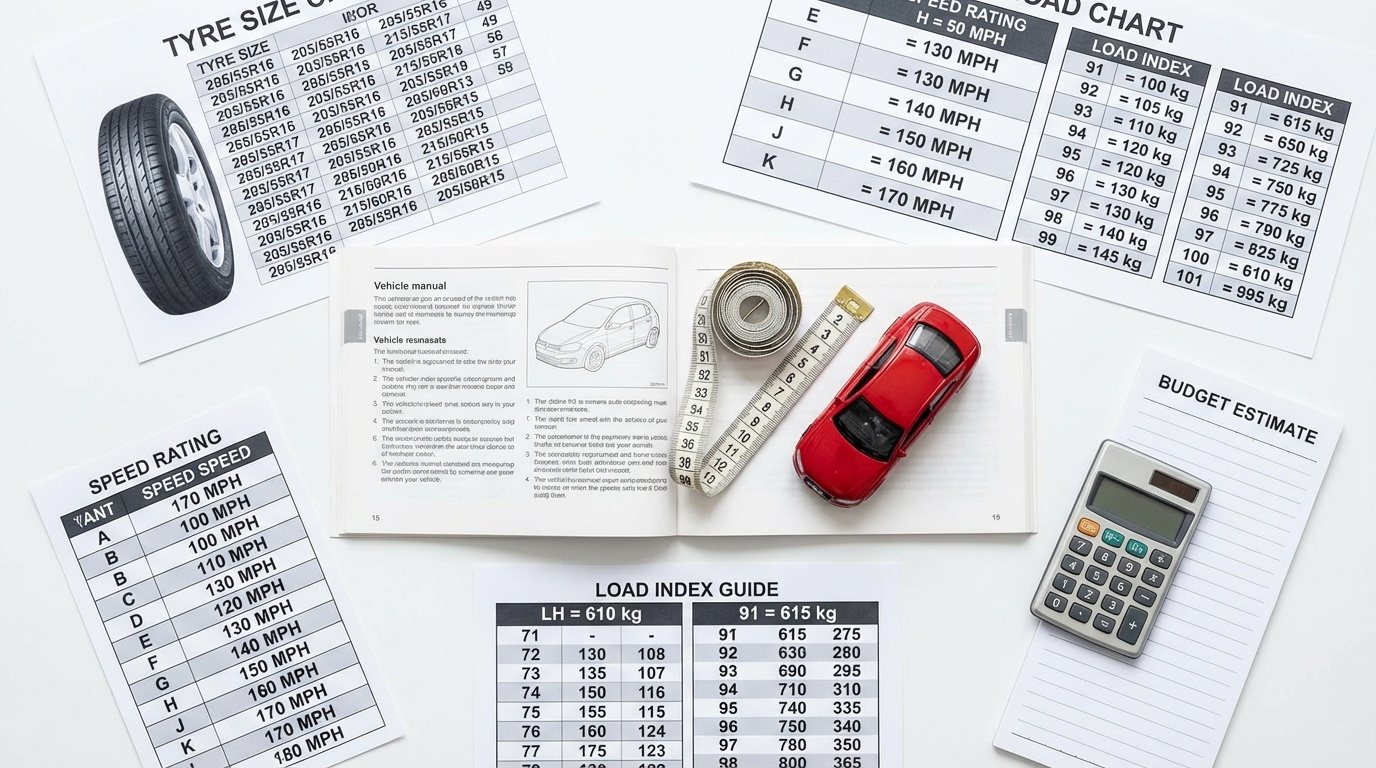
You walk into a tyre shop and the salesman asks: “Kaunsa size chahiye?” And you just stare blankly at your car. Sound familiar? You are not alone. Almost every car owner in India has been in this situation. Those tyre size numbers printed on the sidewall — like 205/55 R16 91V — look like a secret code that only mechanics understand.
But here is the good news — it is actually not complicated at all. Once someone explains it clearly, you will never forget it. In this guide, we break down every single number and letter in a tyre size code, so you always know exactly what tyre your car needs.
Where to Find Your Car’s Tyre Size
Before we explain the numbers, you need to know where to find the correct tyre size for your specific car. There are three places you can check:
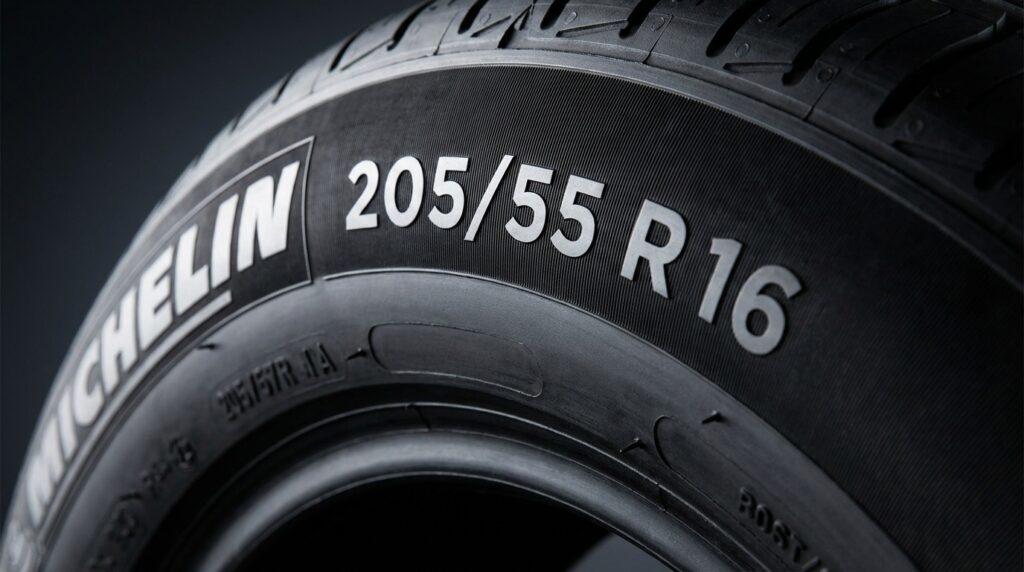
- On the tyre itself: Look at the sidewall of any of your current tyres. The size code is printed in large letters — you cannot miss it.
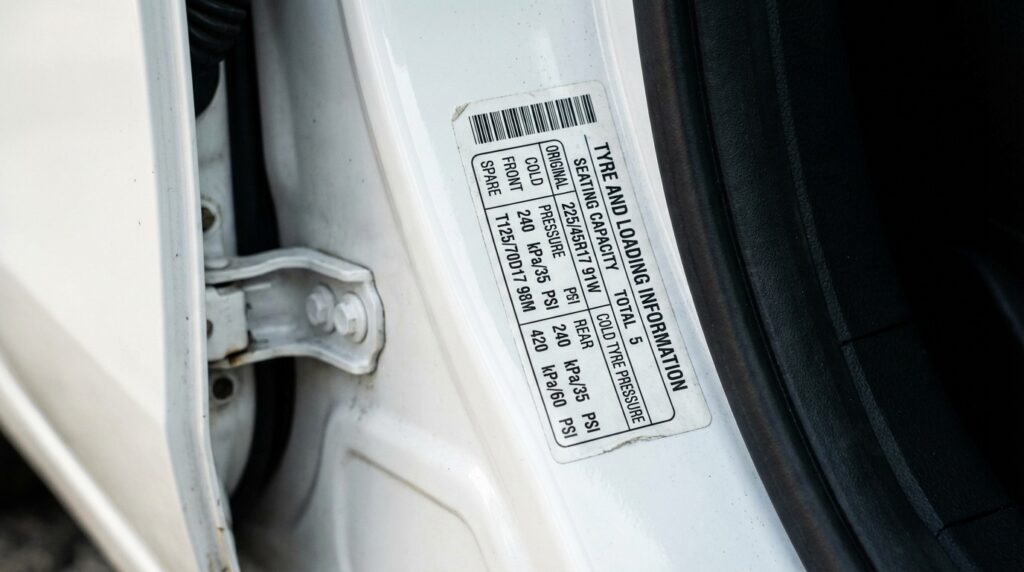
- Inside the driver’s door: Open the driver’s side door and look at the door jamb (the metal frame). There is usually a sticker with the recommended tyre size.
- In your owner’s manual: Your car’s manual has a dedicated section for tyres that lists the recommended size and pressure.
Always use the manufacturer’s recommended tyre size. It has been specifically chosen for your car’s weight, suspension, and performance characteristics.
Car Tyre Size Explained: Breaking Down 205/55 R16 91V
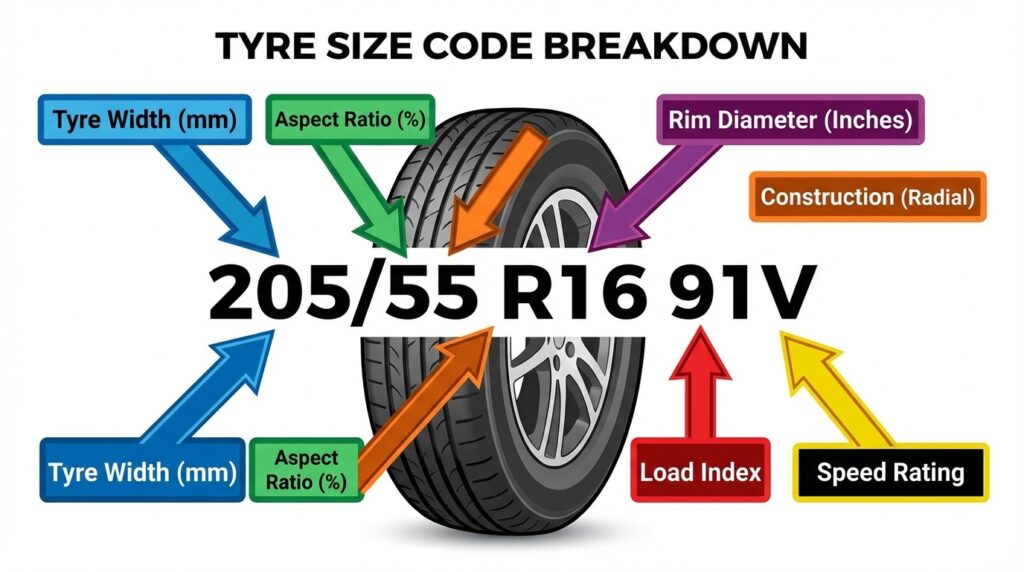
Let us take a common Indian car tyre size — 205/55 R16 91V — and decode it completely, one part at a time.
205 — Tyre Width (in millimeters)
The first number tells you how wide the tyre is, measured in millimeters from one sidewall to the other when the tyre is mounted and inflated. So 205 means the tyre is 205 mm wide — roughly 20.5 centimeters.
A wider tyre (like 225 or 245) gives more grip and a sportier look but uses more fuel. A narrower tyre (like 175 or 185) is more fuel efficient and better for light city cars.
55 — Aspect Ratio (Sidewall Height as % of Width)
The number after the slash is the aspect ratio. It tells you how tall the sidewall is, expressed as a percentage of the tyre’s width. So 55 means the sidewall height is 55% of 205 mm — which equals approximately 113 mm.
A higher aspect ratio (like 65 or 70) means a taller sidewall — more comfortable ride, better for rough Indian roads. A lower aspect ratio (like 40 or 45) means a shorter, stiffer sidewall — sharper handling but a harsher ride. Most standard Indian cars use aspect ratios between 55 and 65.
R — Radial Construction
The letter R stands for Radial, which refers to how the tyre’s internal cords are arranged. In a radial tyre, the cords run perpendicular (at 90 degrees) to the direction of travel. Almost all modern car tyres are radial — you will almost never see a non-radial tyre on a passenger car today.
Radial tyres offer better fuel efficiency, longer tread life, and superior grip compared to older bias-ply constructions. The R in your tyre size is really just confirming your tyre is a modern, standard construction.
16 — Rim Diameter (in inches)
This number tells you the diameter of the wheel rim your tyre fits, measured in inches. A 16 means the tyre fits a 16-inch rim. This number must match your car’s wheel size exactly — you cannot put a 16-inch tyre on a 17-inch rim or vice versa.
Common rim sizes for Indian cars range from 13 inches (small budget hatchbacks) to 18 or 19 inches (premium SUVs). Larger rim sizes generally look sportier but can make the ride harsher on rough roads.
91 — Load Index
The load index is a number that tells you the maximum weight a single tyre can safely carry when properly inflated. 91 corresponds to 615 kg per tyre — meaning all four tyres together can support up to 2,460 kg.
Never fit a tyre with a lower load index than your car’s recommendation. This is a serious safety risk, especially when the car is fully loaded with passengers and luggage.
V — Speed Rating
The speed rating is the last letter in the tyre code. It tells you the maximum speed the tyre is designed to sustain safely for extended periods. V means the tyre is rated up to 240 km/h.
For highway driving in India, always choose at least an H-rated tyre (210 km/h). Never fit a tyre with a lower speed rating than your car requires — it is both illegal and dangerous.
Speed Rating Chart: What Each Letter Means
Here is a quick reference for the most common speed ratings you will see on tyres available in India:
| Speed Symbol | Max Speed | Best For |
| T | 190 km/h | Budget hatchbacks, city cars |
| H | 210 km/h | Standard sedans, highway driving |
| V | 240 km/h | Premium cars, fast highway driving |
| W | 270 km/h | Sports cars, performance vehicles |
| Y | 300 km/h | High-performance supercars |
Common Tyre Sizes for Popular Indian Cars
To give you a practical reference, here are the standard tyre sizes for some of the most popular cars on Indian roads:
- Maruti Suzuki Swift: 175/65 R15
- Hyundai Creta: 215/60 R17
- Tata Nexon: 205/60 R16
- Honda City: 185/60 R15 or 195/55 R16
- Maruti Suzuki Baleno: 185/65 R15
- Kia Seltos: 215/60 R17
- Toyota Innova Crysta: 205/65 R16
- Mahindra Scorpio N: 255/60 R18
Always verify your specific variant’s tyre size from the door jamb sticker or owner’s manual, as different variants of the same model may use different sizes.
Can I Fit a Different Tyre Size on My Car?
This is one of the most common questions tyre shops hear. The short answer is: small variations are sometimes acceptable, but you should always stay as close to the manufacturer’s recommended size as possible.
Here is what you need to know before going up or down in tyre size:
- Changing the width: Going slightly wider (e.g. from 205 to 215) gives marginally better grip but can affect fuel efficiency and may cause rubbing against the wheel arch.
- Changing the aspect ratio: If you go with a lower profile tyre for looks, make sure the overall diameter stays the same — otherwise your speedometer reading will be inaccurate.
- Changing the rim size: You can fit larger rims (e.g. 17 inch instead of 16 inch) as long as the overall tyre diameter stays the same. This is called plus-sizing.
- Never change load index or speed rating downward: These are safety specifications — always match or exceed the manufacturer’s requirement.
- Consult a tyre professional: Before fitting a non-standard size, always ask a trusted tyre expert whether it is safe for your specific vehicle.
Now You Know Your Tyre Size — Never Get Confused Again!
Reading a tyre size is actually straightforward once you understand the system. To recap: the first number is the width in mm, the second is the aspect ratio, R means radial construction, the next number is the rim diameter in inches, the load index tells you how much weight the tyre carries, and the speed rating letter tells you the maximum safe speed.
Next time someone asks what size tyres you need, you will know exactly what to say. And more importantly, you will be able to verify that the tyre being fitted on your car is genuinely the right one — giving you confidence, safety, and peace of mind on every drive.
Still not sure which tyre size is right for your car? Visit our website, enter your car model, and we will show you the perfect tyre options instantly. Drive smart, drive safe!